Choosing the right Sausage Clipper Machine depends on production volume, sausage diameter, casing material, clip specifications, automation level, sanitation procedures, and total ownership cost. I recommend defining your hourly output and product range first, then comparing manual, pneumatic, semi-automatic, and fully automatic machines against your available labor, utilities, floor space, and growth plans.
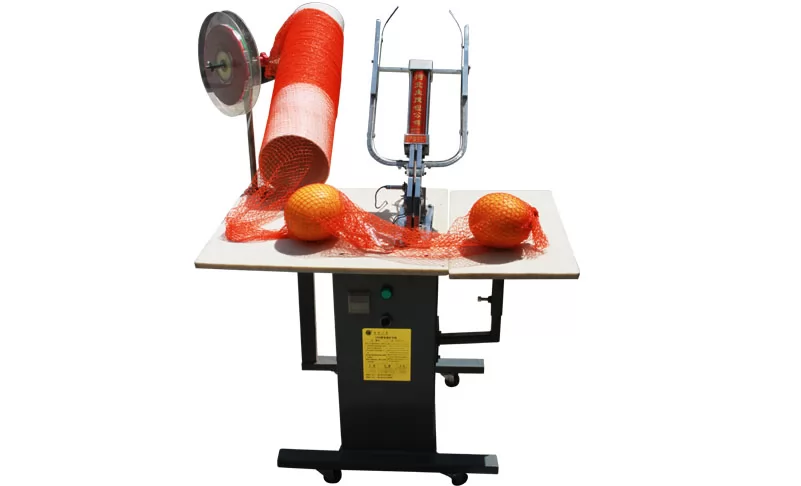
A sausage clipper machine closes sausage casings, bags, or similar tubular packaging with metal clips. Depending on the model, the operator may position the casing manually, activate a lever or pedal, or allow the machine to feed and close the package automatically. The clipping action creates a consistent end seal that helps control product leakage, casing separation, and package presentation.
The machine is normally installed after sausage filling or portioning. A single-clip system closes one end or one package position at a time, while a double clip sausage machine can close the rear of one product and the front of the next product during a continuous operation. This difference affects both production speed and the amount of manual repositioning required.
I treat a clipper as part of a complete meat processing equipment system rather than as an isolated purchase. The filler, casing, clip, clipper head, operator method, conveyor layout, and sanitation routine must work together. A machine that performs well with one casing and clip combination may require different tooling for another product diameter or packaging material.
To choose correctly, I first compare five factors: production volume, sausage calibre, casing and clip compatibility, required automation, and sanitation design. I then calculate labor savings, consumable costs, maintenance exposure, and expected payback instead of selecting the lowest quoted price. The correct machine is the one that meets the required output with acceptable seal consistency, cleaning time, service access, and documented operating conditions.
Start with actual production data from the previous three to six months. Record sausages or kilograms produced per hour, average batch size, peak-day output, number of operators, and time lost during casing changes, cleaning, and clip replenishment. This information is more useful than a broad description such as “small factory” or “high-volume plant.”
A practical capacity calculation is:
Required clipping rate = daily units ÷ productive clipping minutes per day
For example, if a processor must close 9,000 sausages during a 7.5-hour shift and only 6.5 hours are productive after sanitation and changeovers, the required average rate is approximately 23 units per minute. I would not select a machine rated at exactly 23 units per minute because production interruptions and operator variation leave no operating margin. A target range of 30 to 35 clips per minute would provide a more reasonable buffer.
Machine capacity should also reflect the product cycle. A machine may achieve its published rate with one casing diameter, one clip size, and continuous feeding, but the practical rate can fall when operators change products or handle irregularly filled casings. I recommend testing the machine using the actual casing, filling density, clip, and batch size before making a final decision.
The correct automation level depends on output, labor availability, product variety, and expansion plans. A manual machine may be sufficient for a butcher shop producing several hundred units per day, while a processor shipping multiple truckloads per week may need automatic feeding and double clipping. Pneumatic and semi-automatic systems often sit between these two extremes.
| Machine type | Typical planning capacity | Utility requirement | Best fit | Budgetary equipment range |
|---|---|---|---|---|
| Manual clipper | 5–25 clips/minute | None or operator force | Butcher shops and small batches | $300–$2,000 |
| Pedal or electric clipper | 15–40 clips/minute | 110/220 V depending on model | Small processors seeking repeatability | $1,500–$5,000 |
| Pneumatic clipper | 25–70 clips/minute | Compressed air, commonly 0.6–0.8 MPa | Medium production and reduced hand force | $3,000–$10,000 |
| Semi-automatic clipper | 35–90 clips/minute | Electrical power, sometimes compressed air | Multiple batches and growing processors | $6,000–$18,000 |
| Fully automatic clipper | 60–180+ clips/minute | Electrical power, air, and upstream integration | Continuous high-volume lines | $15,000–$60,000+ |
These figures are budgetary planning ranges, not universal machine ratings. Actual prices vary with clip head configuration, feeding system, stainless-steel grade, controls, tooling, shipping, installation, and whether the machine is designed for a single clip or double clip operation. I would request a written quotation that separates the machine, tooling, spare parts, freight, commissioning, and operator training.
Manual clippers have the lowest entry cost and the simplest maintenance profile. They can be a sensible choice when production is intermittent, casing sizes change frequently, or the operator needs direct control over each package. Their main limitation is labor dependency: output, seal consistency, and operator fatigue can vary across a long shift.
Pneumatic clippers use compressed air to assist the closing action. They reduce the hand force required and can provide a more repeatable closing cycle than a basic manual unit, but the plant must already have suitable air capacity, filtration, pressure regulation, and moisture control. If the compressor is undersized, pressure fluctuation can create inconsistent operation and additional downtime.
Semi-automatic machines usually require the operator to position or feed the sausage while the machine performs the clipping cycle. This arrangement can support a useful increase in throughput without committing to a fully integrated line. I often recommend this category for small meat processors that have stable demand but still produce several casing diameters or seasonal products.
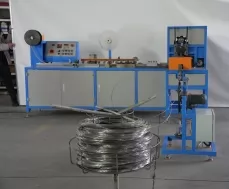
Fully automatic systems are appropriate when clipping is a production bottleneck rather than a general packaging task. They can coordinate feeding, portioning, clipping, and sometimes product transfer, but they require more careful integration with the filler and conveyor. Their purchase price, commissioning requirements, controls, and replacement-part inventory are also more demanding.
Casing compatibility is one of the most important technical checks in a sausage clipper machine buying guide. I would prepare a product matrix listing casing material, flat width or stuffed diameter, wall thickness, filling pressure, end overlap, and required clip model. The supplier should then confirm which clip head, guide, die, and pressure setting match each product.
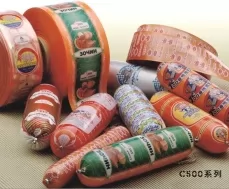
Natural, collagen, fibrous, plastic, and barrier casings do not behave identically during clipping. A casing that stretches easily may need a different compression setting from a stiff barrier casing. If the clip is too small, the closure may cut or distort the casing; if it is too large, the seal may not hold the required product pressure.
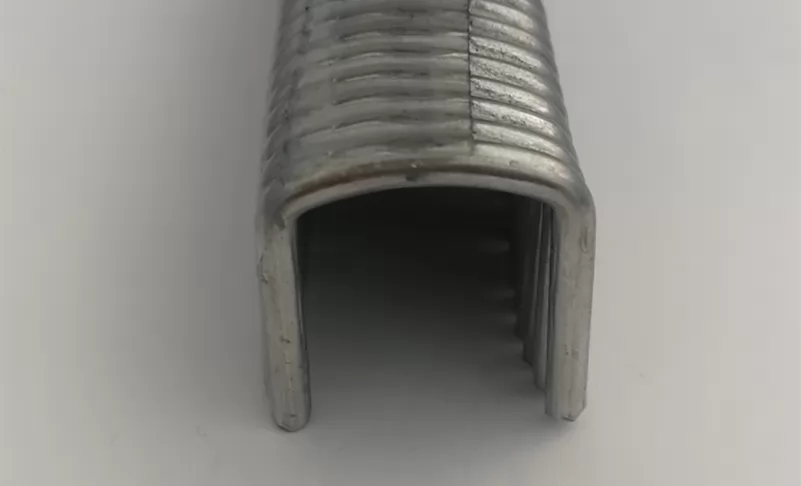
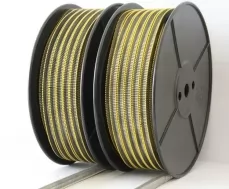
Shengmao lists multiple R-clip and U-clip specifications, including models such as 12-6, 15-06, 18-14, 500, 502, 503, 504, 506, 509, and other series. The company also describes compatibility with several machine families and offers customized clip forms for selected applications. I would still require a product-specific compatibility confirmation because a clip model number alone does not establish suitability for every casing diameter or filling method.
I look for adjustable closing pressure, positive clip feeding, accessible tooling, a guarded moving area, and a repeatable trigger or pedal. The machine should allow operators to change approved clip sizes without lengthy disassembly, while preventing incorrect clip loading. For production control, a cycle counter or basic digital display can help track output and identify performance changes between shifts.
Clip spacing must also be considered. Products that require a fixed distance between closures may need a guide, stop, or integrated portion-control system. A double clipper can improve continuity by placing two clips in one cycle, but it may be unnecessary for short batches or products that are individually cut before clipping.
I also recommend checking whether the clipper can be tested with the intended filler output. A casing that arrives at the clipper under inconsistent tension may cause failures that appear to be machine defects. The acceptance test should measure at least seal formation, casing damage, clip deformation, missed clips, cycle rate, and changeover time over a representative batch.
For meat processing, exposed machine surfaces should be designed for frequent cleaning and inspection. Stainless-steel construction is commonly preferred because it resists corrosion and provides a cleanable surface, but the exact steel grade, weld finish, fastener material, and sealing arrangement still matter. Shengmao describes its automatic clipping machines as typically using stainless-steel construction and presents stainless-steel meat processing equipment within its product range.
I would inspect the machine for open drains, trapped-product areas, exposed threads, difficult-to-reach corners, and unsealed electrical enclosures. A machine can be made from stainless steel and still create sanitation problems if meat residue collects beneath the clip head or around poorly protected bearings. Ask for cleaning instructions that specify which components may be sprayed, which must be removed, and which require hand cleaning.
North American purchasers should request food-contact material declarations, electrical documentation, a parts list, lubrication instructions, and a sanitation procedure before ordering. Depending on the facility and product, the equipment may need to fit internal HACCP controls, local inspection expectations, and site-specific washdown requirements. I do not treat a general statement such as “food grade” as sufficient documentation.
Cleaning time should be measured as an operating cost. If one machine takes 20 minutes longer to disassemble and sanitize per shift, a facility operating 300 days per year accumulates 100 additional labor hours annually. At a fully burdened labor cost of $24 per hour, that difference represents approximately $2,400 per year before considering water, chemicals, and production scheduling.
A sausage clipper machine has several wear points: clip guides, forming dies, cutting elements, springs, pneumatic seals, sensors, bearings, and product-contact surfaces. I ask suppliers to identify each wear part, its expected service interval, unit price, and normal replacement method. If a technician must travel internationally for a basic guide replacement, the service risk may exceed the original price advantage.
Maintenance requirements should be written in operating hours or cycles rather than described with vague terms. A useful maintenance schedule may include daily cleaning, weekly inspection of fasteners and clip alignment, monthly lubrication where permitted, and quarterly checks of pneumatic pressure or sensor operation. The actual schedule must follow the machine manual and the plant’s sanitation program.
Spare-parts lead time is especially important for imported machinery. I recommend purchasing a starter kit containing at least one complete clip guide set, springs, seals, sensors, cutting components, and other identified wear parts. For a production line that loses $1,500 per day in contribution margin during downtime, a $400 spare-parts kit can be financially justified if it prevents a multi-week delay.
Warranty terms should cover more than the machine frame. The quotation should state warranty duration, covered components, response time, remote troubleshooting method, replacement-part freight responsibility, and exclusions for consumables or incorrect cleaning. Shengmao identifies technical services, clipper machines, clips, and related packaging products as part of its business scope, so I would ask for a formal service plan rather than relying on a general supplier statement.
Electrical compatibility is a common source of purchasing delays in North America. Confirm whether the machine requires 110 V or 220 V, single-phase or three-phase power, and 50 or 60 Hz operation. The buyer should also verify plug type, full-load current, disconnect requirements, control-voltage details, and whether a transformer or frequency adjustment is needed.
Pneumatic equipment requires more than a compressor connection. Confirm operating pressure, air consumption per cycle, filtration level, moisture separation, hose diameter, and whether the machine includes a regulator and gauge. If the plant’s air supply drops below the required pressure during peak demand, the clipper may slow down or fail to complete the cycle.
Installation planning should include floor space, operator clearance, product infeed height, drainage, washdown zones, and material handling. I would request a dimensional drawing and utility sheet before approving the purchase order. A machine that cannot align with the filler outlet may require a custom conveyor or manual transfer station, adding cost and reducing the expected throughput.
The purchase price is only one part of total cost of ownership. I calculate five-year cost using equipment price, freight, installation, clips, labor, electricity or compressed air, sanitation time, preventive maintenance, spare parts, and expected downtime. This method often changes the preferred machine category.
Consider a small processor producing 4,000 sausages per day. If a semi-automatic machine reduces clipping labor by two hours per day at $24 per hour, the direct labor saving is $48 per day. Across 250 production days, the annual saving is $12,000; after subtracting $2,000 for maintenance, air, electricity, and additional consumables, a $10,000 equipment investment could show a simple payback of approximately 1.0 year.
That calculation should be adjusted for utilization. If the machine operates only 60 days per year, the same investment may require more than four years to recover. I also subtract the value of training, changeover time, rejected products, and downtime risk because these costs can materially affect the result.
| Cost category | Manual clipper | Pneumatic or semi-automatic | Fully automatic |
|---|---|---|---|
| Initial equipment | $300–$5,000 | $3,000–$18,000 | $15,000–$60,000+ |
| Direct labor demand | High | Medium | Low to medium |
| Utility cost | Minimal | Air and electricity | Electricity, air, controls |
| Changeover flexibility | High | Medium to high | Medium |
| Spare-parts exposure | Low | Medium | Medium to high |
| Typical payback target | 2–5 years | 1–3 years | 1–4 years with sustained volume |
These payback ranges are planning targets rather than guarantees. I would approve automation only when the production forecast supports the expected utilization and when the supplier can demonstrate the required cycle rate using actual materials. A machine that sits idle for most of the year may have a lower economic return than a manual or semi-automatic model.
The following matrix helps connect machine type to production conditions. I use it as a starting point, then validate the choice with a sample test and written quotation.
| Operating condition | Recommended starting point | Main reason |
|---|---|---|
| Fewer than 1,000 units per day | Manual or pedal clipper | Low capital cost and flexible batch handling |
| 1,000–5,000 units per day | Electric, pneumatic, or semi-automatic | Reduced hand force and improved cycle consistency |
| 5,000–15,000 units per day | Semi-automatic or double clipper | Better labor efficiency and batch continuity |
| More than 15,000 units per day | Automatic clipper or integrated line | Capacity and labor control become primary factors |
| Many casing diameters | Manual or semi-automatic with interchangeable tooling | Faster product changeovers |
| One or two standardized products | Automatic system | Easier optimization and repeatable setup |
| Seasonal growth expected | Semi-automatic with upgrade path | Lower initial risk with room for capacity expansion |
| Limited compressed air | Electric or manual design | Avoids compressor upgrades and pressure instability |
For a sausage clipper machine for small meat processors, I usually prioritize casing flexibility, cleaning access, local technical support, and simple tooling replacement before maximum speed. A processor producing 2,000 units per day may gain little from a 150-clip-per-minute system if casing changes, weighing, smoking, or packaging remain slower. The bottleneck should be identified before automation is purchased.
Shengmao, formally Hebei Shengmao Packaging Materials Co., Ltd., states that it was founded in 1992 and supplies clipper machines, R-clips, U-clips, wire clips, sausage casings, and related packaging products. Its published machine categories include automatic, manual, electric, pneumatic, semi-automatic, and double-clip configurations. This product breadth can simplify compatibility discussions because the machine and consumable questions can be reviewed together.
The company also states that it has developed products with technical support from Hebei University and distributes through a network covering 24 provinces and cities in China, with exports to countries including the United States, Mexico, Brazil, and Russia. I would treat these statements as a starting point for due diligence rather than as a substitute for customer references. For a North American purchase, I would request two references using comparable casing materials and production volumes.
Before placing an order with Shengmao or another manufacturer, I would ask for a factory acceptance test, machine photographs showing the actual model, a full technical data sheet, and a consumables list. The test report should record clip type, casing diameter, cycle rate, seal result, rejected units, and changeover time. I would also clarify whether the quoted price includes export packing, insurance, installation support, remote training, and spare-parts recommendations.
The first mistake is selecting capacity from a headline maximum rather than a measured average. If the advertised rate is 100 clips per minute but the actual product requires frequent casing alignment, the sustained rate may be substantially lower. I recommend using a conservative operating target at 70% to 80% of the demonstrated peak rate unless the supplier provides a longer production trial.
The second mistake is ordering a machine before confirming clips and casing. A clipper head designed for one series may not accept another series without tooling changes. I would send physical casing samples, clip specifications, and finished-product drawings before requesting a final quotation.
The third mistake is ignoring cleaning and maintenance labor. A machine that saves 90 minutes of clipping labor but adds 60 minutes of sanitation and setup may provide less benefit than expected. Total daily labor should be compared before and after installation.
The fourth mistake is failing to plan for delivery risk. I request production milestones, pre-shipment inspection dates, export documents, packing details, and spare-parts availability in writing. If a critical machine is imported, I also maintain enough manual capacity to continue limited production during commissioning or service delays.
Before I approve a sausage clipper machine, I verify the following items:
How to Choose the Right Sausage Clipper Machine starts with measurable production requirements rather than a generic equipment ranking. I recommend matching the machine type to actual output, then confirming sausage casing size compatibility, clip dimensions, clip spacing, sanitation access, electrical requirements, service support, and spare-parts lead times. Manual systems remain practical for small batches, pneumatic and semi-automatic machines fit many growing processors, and fully automatic equipment becomes financially logical when sustained volume supports the investment.
The final decision should include a five-year total cost of ownership calculation. Compare labor savings with energy, compressed air, sanitation time, consumables, maintenance, downtime, installation, and training costs. When evaluating Shengmao or another supplier, request a sample test, technical drawings, food-contact documentation, warranty terms, and a delivery plan before signing the purchase order. By comparing capacity, compatibility, hygiene, service, and payback together, I can select a machine that fits current production while leaving a practical path for future growth.